Why Do Cracks Appear in Walls — and How to Prevent Them?

Cracks in walls are one of the most common — and most misunderstood — issues in Indian residential construction. Most are harmless. Some are not. This guide helps you tell the difference and prevent both.

Types of Wall Cracks

Crack Type Appearance Severity Cause
Hairline cracks Very fine, <0.5mm Low — cosmetic Plaster shrinkage, thermal movement
Settlement cracks Diagonal at corners Medium Differential foundation settlement
Structural cracks Wide, through-wall High — urgent Foundation failure, overloading
Moisture cracks Irregular, damp patches Medium Water ingress, leakage

Most Common Causes in Kolkata Homes

  • Poor curing: Cement plaster must be cured with water for minimum 7 days. Skipping this causes shrinkage cracks as the plaster dries too fast.
  • Foundation issues: Kolkata’s soft soil requires proper foundation design. Inadequate depth or width causes settlement cracks.
  • Thermal expansion: Temperature changes cause walls to expand and contract. This is normal but must be accommodated with control joints in long walls.
  • Substandard materials: Excessive water in concrete (high water-cement ratio) causes cracking on setting. Always follow mix ratios.
  • Overloading: Placing heavy loads (water tanks, AC units) on walls not designed for them can cause structural cracking.

Prevention Checklist

  • ✅ Soil test before foundation design
  • ✅ Proper concrete mix ratios (do not add excess water)
  • ✅ 7-day wet curing of all plaster and concrete
  • ✅ Control joints in walls longer than 6 metres
  • ✅ Waterproof parapet walls to prevent water entry
  • ✅ Use only verified quality cement and aggregates
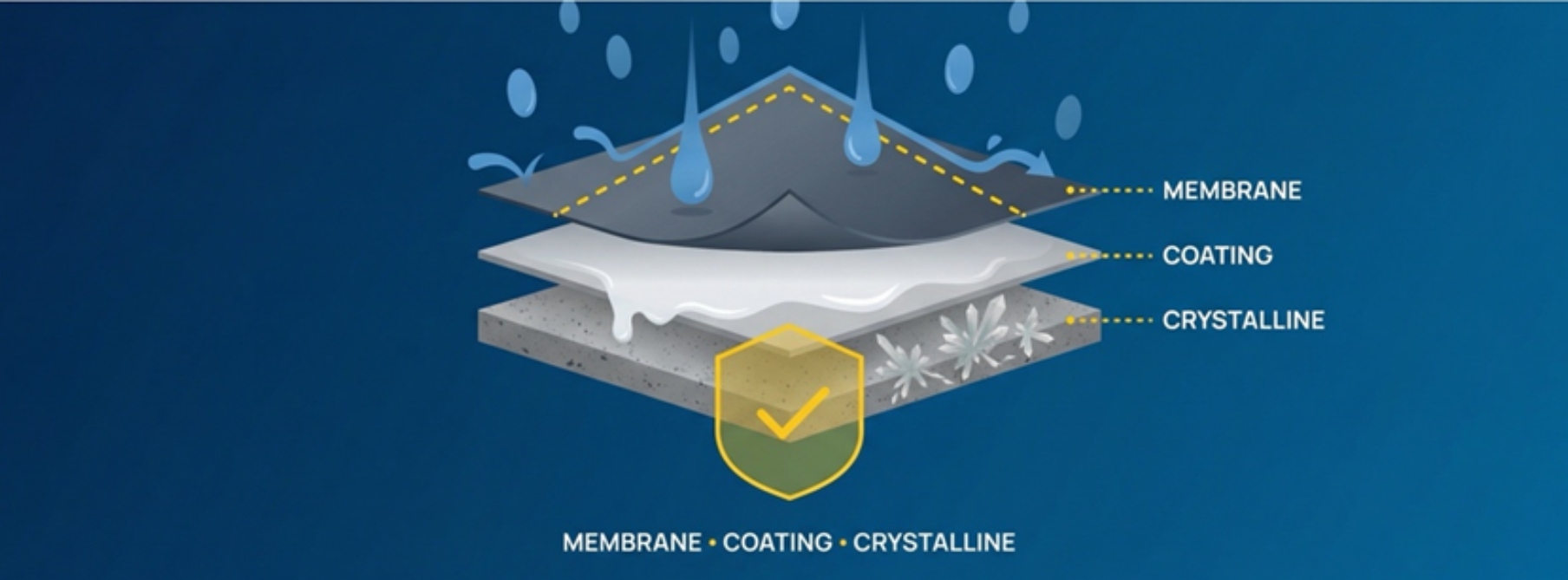
How to Waterproof Your Roof Properly — Complete 2026 Guide

Kolkata receives over 1,600mm of annual rainfall — most of it concentrated in June to September. A properly waterproofed roof is not optional. This guide covers every method, cost, and which works best for your situation.

Why Roof Waterproofing Fails

The most common reason waterproofing fails is not the product — it is application. Waterproofing applied over dirty, damp, or cracked surfaces will fail within 1–2 monsoons regardless of brand. Surface preparation is 70% of the job.

Waterproofing Methods Compared

Method Cost (per sq.ft.) Life Best For
Bituminous membrane ₹60–₹90 10–15 years Flat RCC roofs
Cementitious coating ₹25–₹45 5–8 years Toilets, terraces, basements
Liquid applied membrane ₹50–₹80 8–12 years Complex shapes, parapet walls
Crystalline waterproofing ₹70–₹100 Lifetime Water tanks, basements
Chinese tiles (Madras terrace) ₹35–₹55 15–20 years Traditional Kolkata roofs

Step-by-Step Roof Waterproofing Process

  1. Inspect and repair: Fill all cracks with polymer-modified mortar. Allow to cure for 3–5 days.
  2. Clean thoroughly: Remove dust, laitance, and any oil. A clean surface is essential for adhesion.
  3. Apply primer: Bituminous primer for membrane systems; bonding agent for cementitious systems.
  4. Apply waterproofing: Follow manufacturer specification — number of coats, wet film thickness, overlap at joints.
  5. Protect the waterproofing: A protective screed or tiles prevents UV damage and foot traffic damage to the membrane.
  6. Check drainage: Ensure rainwater outlets are clear and sloped correctly — minimum 1:80 fall.

💡 Kolkata-specific tip: Treat parapet wall joints and slab-to-parapet junctions as a priority — these are the most common entry points for water in Kolkata homes.