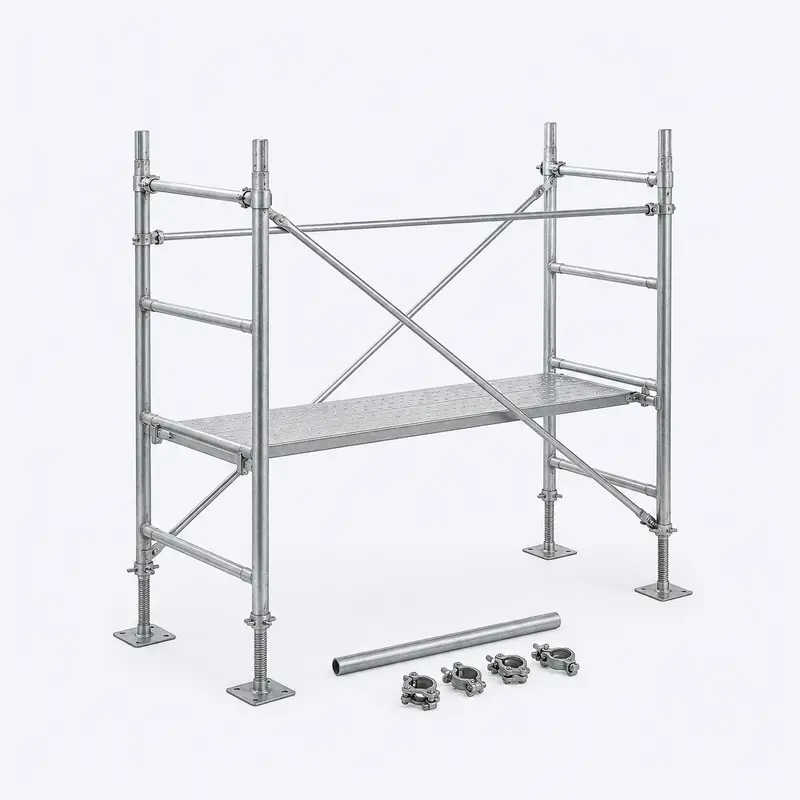
Start with a Strong Foundation
A scaffold is only as safe as the ground it’s built on. Uneven or unstable surfaces can cause the entire structure to shift, increasing the risk of accidents. Before work begins:
- Ensure the ground is level and firm.
- Use proper base plates and supports.
- Avoid placing scaffolding on loose soil or unstable surfaces.
- Check the foundation after heavy rain.
Inspect Scaffolding Every Day
Scaffolding is exposed to heavy loads, changing weather, and constant movement. A quick inspection each day can help identify problems before they become serious. Look for:
- Loose joints or fittings.
- Damaged platforms.
- Bent or rusted steel components.
- Missing guardrails or toe boards.
Don’t Overload the Platform
Scaffolding is designed to carry a specific amount of weight. Loading it with excessive construction materials, tools, or workers can reduce its stability. To stay safe:
- Follow the recommended load capacity.
- Distribute materials evenly.
- Store only the required materials on the platform.
- Remove unnecessary equipment regularly.
Always Use Safety Equipment
Even with high quality scaffolding, personal safety equipment is essential. Workers should always:
- Wear helmets and safety shoes.
- Use safety harnesses when working at height.
- Keep platforms clean and free of debris.
- Follow all site safety instructions.
Quick Checklist
- Inspect the structure thoroughly.
- Confirm it’s installed correctly.
- Never exceed the load limit.
- Ensure workers wear proper safety gear.
- Stop work immediately if any damage is found.
Final Thoughts
Safe scaffolding protects both workers and your investment. Combined with quality cement, sand, TMT bars, and other building materials, it helps ensure your construction project is completed efficiently and without unnecessary delays.
Find Scaffolding Suppliers Near You
Compare verified scaffolding dealers and other construction materials in one place.