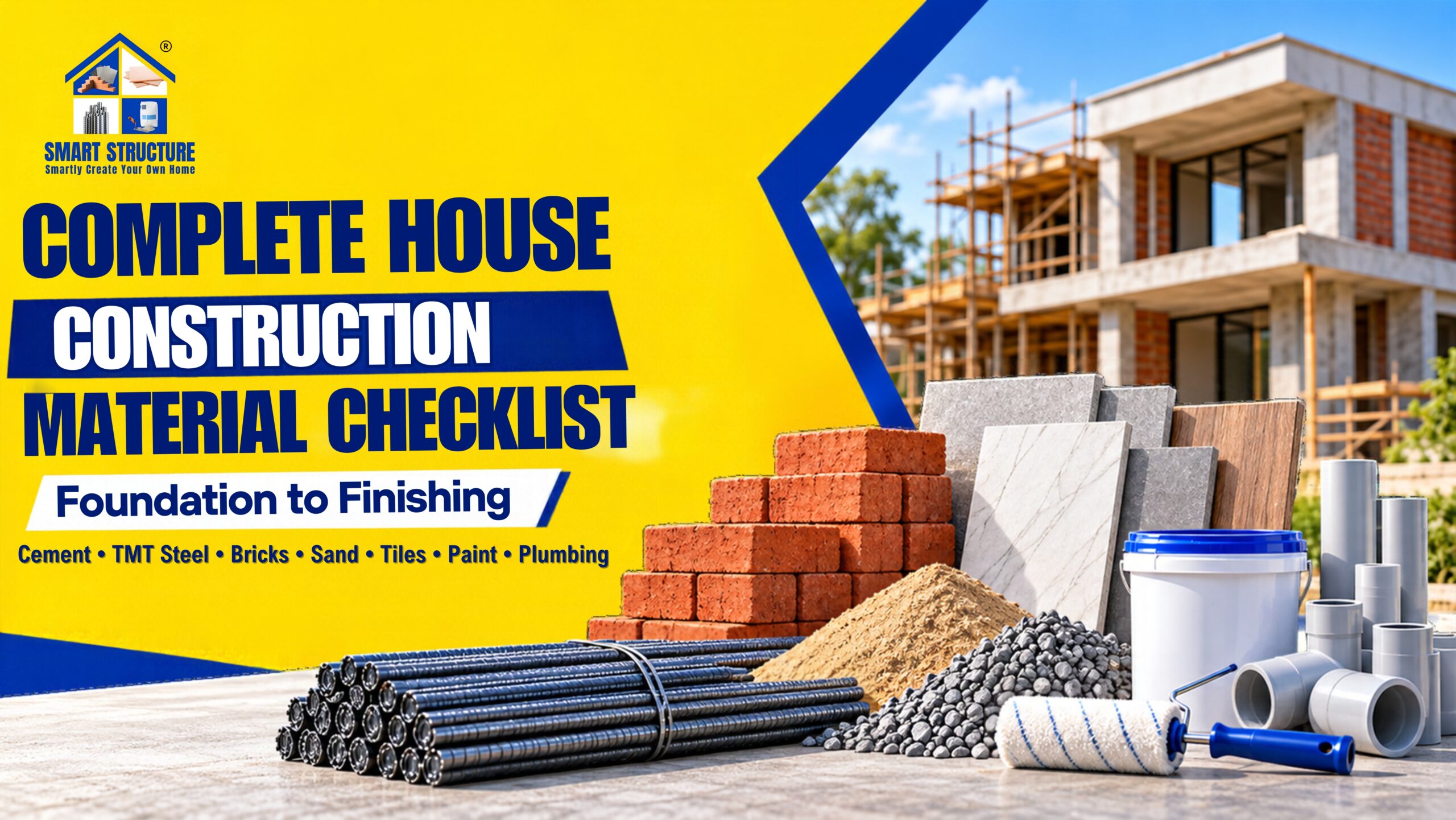
Building a house involves more than choosing a design and hiring a contractor. Explore the complete house construction material checklist from foundation to finishing, including TMT steel, cement, bricks, sand, tiles, paint and plumbing. Every stage needs the right products, quantities and delivery schedule. This complete house construction material checklist helps homeowners in Kolkata and across India plan purchases, avoid last-minute shortages and make informed decisions.
1. Planning and Site Preparation
Before ordering materials, finalise your approved drawings, structural design, budget and bill of quantities (BOQ). Confirm soil conditions and foundation requirements with your engineer. Arrange temporary water, electricity, protective equipment and a secure storage area.
Checklist: Measuring tools, marking lime, safety gear, excavation supplies, tarpaulins and temporary site utilities.
2. Foundation: Cement, TMT Steel, Sand and Aggregates
A strong foundation transfers your home’s loads safely to the ground. The specification depends on the soil investigation and structural design, so never select reinforcement sizes or concrete mixes by guesswork.
Essential materials:
- Cement: Use the type and grade specified by your engineer. Check sealed bags, manufacturing dates and proper dry storage.
- TMT steel: Purchase the specified grade and bar diameters; verify manufacturer markings and test documentation.
- Sand: Choose clean, suitable sand for the intended concrete or mortar work.
- Stone chips or aggregates: Check size, cleanliness and grading as required.
- Other supplies: Binding wire, shuttering materials, cover blocks and approved waterproofing or damp-proofing products.
Order these in stages to reduce waste and storage problems.
3. Plinth, Columns, Beams and Roof Slab
The reinforced concrete (RCC) framework creates the main structure of many homes. Columns, beams, slabs and staircases require accurately placed reinforcement, formwork and correctly prepared concrete.
Checklist: Cement, TMT bars, sand, aggregates, binding wire, shuttering plywood or plates, props, spacers and curing supplies.
Follow the structural drawings and engineer-approved construction methods. Proper curing and inspection are as important as buying quality materials.
4. Wall Construction: Bricks and Blocks
Once the structure reaches the required stage, masonry work begins. Common choices include clay bricks, fly-ash bricks, concrete blocks and AAC blocks. Select the type specified for your project, considering dimensions, strength, weight and installation needs.
Checklist: Bricks or blocks, masonry mortar materials, lintel supplies where specified, and water for curing.
Inspect deliveries for cracks, inconsistent dimensions and breakage. Plan service openings early to avoid unnecessary cutting.
5. Plumbing and Electrical Rough-In
Concealed plumbing pipes and electrical conduits should be installed at the planned stage, before plastering and tiling cover them.
Plumbing checklist: Water-supply pipes, drainage pipes, elbows, tees, valves, traps, joints, solvent or joining accessories, and testing supplies.
Electrical checklist: Conduits, junction boxes, switch boxes, approved wires, distribution-board components and earthing materials.
Use suitable pipe materials for hot and cold water, and have qualified professionals test pipework and electrical installations. Record concealed pipe and conduit locations for future repairs.
6. Waterproofing, Plastering and Surface Preparation
Water leakage can damage paint, ceilings and walls even in a newly built home. Give special attention to bathrooms, balconies, terraces and other wet areas, particularly during Kolkata’s monsoon season.
Checklist: Specified waterproofing membranes or compounds, primers, sealants, cement, plastering sand, repair mortar and curing materials.
Complete relevant waterproofing tests before covering treated areas. Ensure plaster is sufficiently cured and dry before applying putty or paint.
7. Flooring, Tiles, Doors and Windows
Finishing materials influence both appearance and maintenance. Select flooring based on traffic, slip resistance, cleaning needs and room conditions.
Checklist: Floor and wall tiles, tile adhesive, grout, spacers, skirting, door frames, shutters, windows, glass, hinges, locks and hardware.
Measure finished areas carefully. Include a reasonable cutting and breakage allowance when ordering tiles, and check that boxes match in shade and batch.
8. Paint, Sanitaryware and Final Fittings
Painting generally involves surface preparation, primer, putty where required and compatible interior or exterior coatings. Kitchens and bathrooms also need their final fixtures.
Checklist: Wall putty, primers, paints, brushes or rollers, taps, faucets, basins, toilets, showers, sinks, switches, lights and accessories.
Inspect finishes, test fittings and keep spare tiles or paint details for later touch-ups.
Complete House Construction Material Checklist – Foundation to Finishing
| Sl. No. | Construction Stage | Materials Required | Purpose |
|---|---|---|---|
| 1 | Foundation | Cement, TMT Steel, Sand, Stone Chips, Binding Wire | Strength and structural stability |
| 2 | RCC Structure | TMT Bars, Cement, Sand, Aggregates, Shuttering Plywood | Columns, beams, slabs and roofing |
| 3 | Wall Construction | Red Bricks, Fly Ash Bricks, AAC Blocks, Cement, Sand | Walls and partitions |
| 4 | Plumbing | PVC Pipes, CPVC Pipes, Elbows, Tees, Valves | Water supply and drainage |
| 5 | Electrical Work | Wires, Conduits, Switches, Distribution Boards | Electrical wiring and connections |
| 6 | Waterproofing | Waterproofing Chemicals, Sealants, Coatings | Preventing leakage and dampness |
| 7 | Plastering | Cement, Fine Sand, Water | Smooth wall surfaces |
| 8 | Flooring & Tiling | Vitrified Tiles, Ceramic Tiles, Tile Adhesive, Grout | Flooring and wall finishes |
| 9 | Painting | Wall Putty, Primer, Interior Paint, Exterior Paint | Surface protection and decoration |
| 10 | Doors & Windows | Plywood, Wooden Doors, Aluminium Frames, Glass, Hardware | Security and ventilation |
| 11 | Bathroom & Kitchen | Sanitaryware, Faucets, Wash Basins, Sinks | Kitchen and bathroom installations |
| 12 | Final Finishing | Lights, Fans, Door Locks, Switchboards | Final installation and finishing |
Smart Buying Tips for Homeowners
Prepare separate orders for each construction stage, compare like-for-like specifications, and confirm delivery charges and unloading arrangements. Avoid buying moisture-sensitive materials too early. Keep invoices, warranty details and product batch information.
With the Smart Structure, homeowners can explore building-material categories and compare available options from local dealers in Kolkata. Plan your requirements first, then check current specifications, availability and delivered prices before ordering.
Download Smart Structure on Google Play or the Apple App Store.
Frequently Asked Questions
Which materials should I purchase first? After planning and site preparation, buy foundation materials according to your contractor’s approved work schedule.
How do I estimate quantities? Use the approved BOQ and engineer-checked drawings rather than generic per-square-foot estimates.
A clear checklist helps take your home from foundation to finishing.